

SEBS polymer and SBS polymer are styrenic block copolymers used as the base materials in many thermoplastic elastomer (TPE) compounds. Process oils help manufacturers soften these polymers and fine-tune properties such as Shore A hardness for applications ranging from automotive interiors to tool grips. Questions? Contact us.
Thermoplastic elastomers combine some of the flexibility of rubber with the processing advantages of thermoplastics.
They can be melted, molded, and reshaped using common plastics-processing methods such as injection molding and extrusion. Among the most widely used are styrenic block copolymers, including SEBS and SBS.
For manufacturers, choosing the polymer is only part of the equation. The process oil added to the compound has a major effect on softness, flow, color stability, volatility, and long-term performance.
Suzanne Kingsbury, Director of Quality
What Are SEBS Polymer and SBS Polymer?
These common base materials in TPE production are very similar:
- SBS polymer, or styrene-butadiene-styrene, is a block copolymer made with hard styrene blocks and a softer butadiene block. That structure gives it a combination of strength and rubber-like elasticity.
- SEBS polymer, or styrene-ethylene-butylene-styrene, is closely related. In fact, SEBS is produced by hydrogenating SBS. This changes the butadiene portion of the polymer into a more saturated ethylene-butylene block.
That hydrogenation gives SEBS improved resistance to heat, ultraviolet light, ozone, and weathering. SBS can offer strong mechanical properties at a lower cost, while SEBS is often selected for applications that need greater durability, color stability, or environmental resistance.
Both are part of the larger family of styrenic block copolymers. Their hard styrene sections provide strength, while the softer mid-block provides flexibility and elasticity.
Where Are SEBS/SBS Polymers Used?
The balance of strength, flexibility, and processability makes SEBS/SBS polymers useful across a wide range of industries.
- Automotive manufacturers use soft-touch TPEs for interior trim, grips, mats, seals and other molded components. SEBS can be especially useful where heat, ultraviolet exposure, color stability, and low fogging are important. As we have discussed previously, paraffinic process oils can help improve the performance of automotive plastics.
- Consumer product manufacturers use styrenic TPEs for products such as toothbrush and personal-care grips, hand tools, kitchen products, sporting goods, and other surfaces that need a comfortable or non-slip feel. Kuraray, for example, identifies soft-touch grips and personal-care products among the applications for styrenic TPEs.
- Medical product manufacturers can use appropriate grades of styrenic block copolymers for tubing, films, orthopedic gels, and other flexible products. The exact polymer and oil must be selected to meet the regulatory and performance requirements of the finished application.
- Construction and adhesive manufacturers also use SBS and related polymers. SBS is commonly used in polymer-modified asphalt, while styrenic block copolymers are also found in adhesives, coatings, and sealants.
How Process Oils Soften SEBS Polymer and SBS Polymer
A raw polymer may be harder than the finished product needs to be. Process oil acts as a plasticizer and extender, helping soften the rubber-like phase of the compound while also improving processing and flow.
In general, adding compatible process oil lowers hardness. The manufacturer can adjust the formulation based on the desired feel and the other performance requirements of the part.
Star Thermoplastics Study
Renkert Oil has tested this effect directly in an SEBS formulation. In a study conducted with Star Thermoplastic Alloys and Rubbers, a polypropylene/SEBS compound with no extender oil measured 97 Shore A. When the formulation contained 50 percent Chevron ParaLux 6001, hardness dropped to 66 Shore A. A formulation using 50 percent higher-molecular-weight Renoil 1500-LV measured 69 Shore A.
The above example shows why process oil is more than a processing aid. It can be a useful formulation tool for moving a SEBS polymer from a relatively hard compound toward a much softer finished material.
The same basic principle applies to SBS polymer. Extender oils can reduce hardness and viscosity while changing the processing and mechanical properties of the finished compound.
SEBS/SBS Polymers and Shore A Hardness
How do manufacturers put a number on “soft”?
One of the most common measurements for TPEs is Shore A hardness, measured with an instrument called a durometer. ASTM D2240 covers durometer hardness testing for rubber, thermoplastic elastomers, and related materials.
The test measures how deeply a standardized indenter penetrates the surface of the material under a specified force. A lower Shore A number means a softer material because the indenter penetrates farther. A higher number indicates a harder material that offers more resistance to indentation.
TPE manufacturers may formulate products across a wide portion of the Shore A scale, including approximately 40 Shore A through the upper end of the scale (100), depending on the application. Commercial SEBS-based TPE grades are available at approximately 40 Shore A, for example, making this range useful for soft and flexible products such as grips (typically Shore 60) and overmolded surfaces.
One important distinction is that 100 Shore A should not be interpreted as extremely soft. It represents the hard end of the Shore A scale. In fact, Shore A measurements become less useful near the top of the scale, where Shore D is often a more appropriate test.
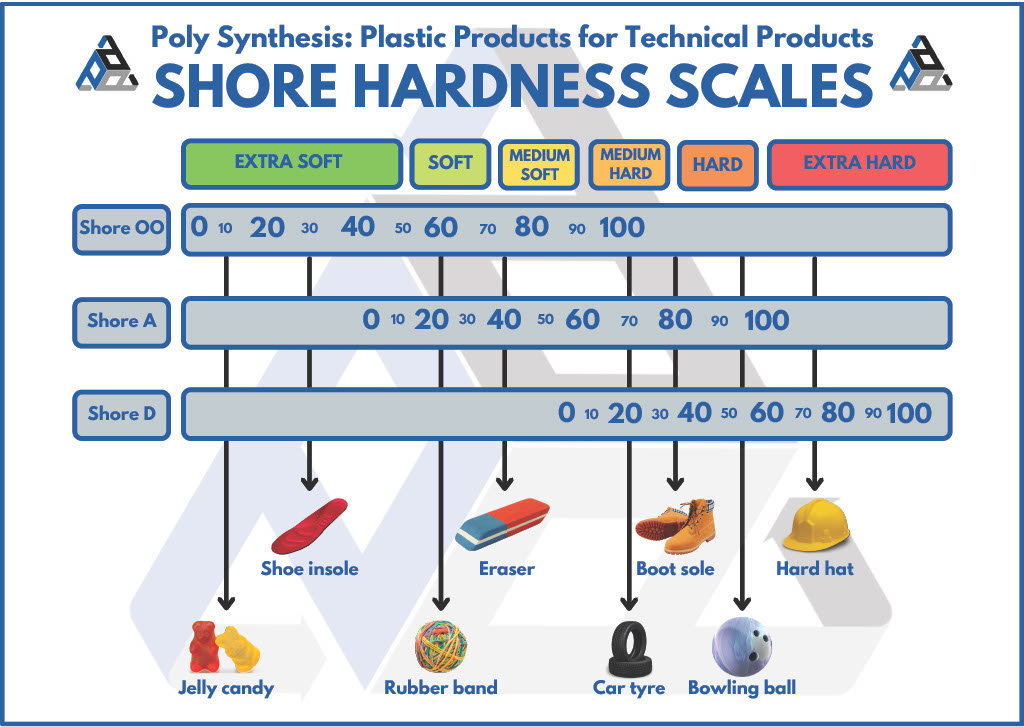
So, while manufacturers may use process oils to help dial in hardness anywhere from around 40 Shore A toward the upper Shore A range, the lower and middle portions of that range are more closely associated with the familiar “soft-touch” feel.
Choosing Process Oils for SEBS/SBS Polymers
Reaching a target Shore A number is only one goal. The oil must also stay compatible with the compound and support the finished product over time.
For example, a soft-touch automotive component can leave the production line at the correct hardness but develop problems later if its process oil is too volatile. Heat can cause oil to migrate or evaporate, potentially contributing to windshield fogging and eventually changing the flexibility of the TPE.
That is why manufacturers may need to consider:
- Polymer and oil compatibility
- Target Shore A hardness
- Oil viscosity and molecular weight
- Volatility and oil migration
- Heat and ultraviolet exposure
- Color and color stability
- Finished-part regulatory requirements
The correct balance depends on the formulation. There is no single process oil that is right for every SEBS polymer or SBS polymer application.
Find the Right Process Oil for Your SEBS Polymer or SBS Polymer
At Renkert Oil, we have decades of experience helping TPE and rubber manufacturers match process oils to demanding applications.
Our portfolio includes:
- Chevron ParaLux process oils, which are highly refined and well-suited to TPE applications where softness, polymer compatibility, color stability, and low volatility matter.
- Renoil products, including low-volatility and higher-molecular-weight options that can help reduce oil mobility and support long-term flexibility.
Our experience goes far beyond supplying the oil.
We have worked directly with TPE manufacturers to evaluate how process oil affects Shore A hardness, fogging, volatility, and other finished-part properties. That gives us practical insight into the tradeoffs that matter when formulating SEBS/SBS polymers.
Whether you need a soft-touch TPE around 40 Shore A, a firmer compound farther up the scale, or help balancing hardness with color and low-volatility requirements, we can help you select a process oil that fits the polymer, process and finished product.
Questions about process oils for SEBS polymer or SBS polymer? Contact Renkert Oil.
FAQs: Softening SEBS/SBS Polymers with Process Oil
- What is SEBS polymer?
SEBS polymer, or styrene-ethylene-butylene-styrene, is a styrenic block copolymer commonly used as a base material for thermoplastic elastomer compounds. It offers rubber-like flexibility along with good resistance to heat, ultraviolet light, ozone, and weathering.
- What is SBS polymer?
SBS polymer, or styrene-butadiene-styrene, is a styrenic block copolymer that combines hard styrene blocks with a flexible butadiene block. It is used in TPE compounds, adhesives, asphalt modification, footwear, and other flexible applications.
- What is the difference between SEBS polymer and SBS polymer?
Without getting into the details of the chemistry, the practical difference is that SEBS generally has better resistance to heat, oxidation, ultraviolet light, and weathering, while SBS can provide strong elasticity and cost-effective performance in suitable applications.
- Are SEBS and SBS types of thermoplastic elastomers?
Yes. SEBS and SBS belong to the styrenic block copolymer family of thermoplastic elastomers. They are also commonly used as base polymers in formulated TPE compounds that include process oils, resins, fillers, and other ingredients.
- Why are process oils added to SEBS and SBS polymers?
Process oils can soften SEBS and SBS compounds, reduce viscosity, improve processing, and help manufacturers reach a targeted level of flexibility. The amount and type of oil can also affect volatility, migration, color, and long-term performance.
- What is Shore A hardness?
Shore A is a durometer scale used to measure the hardness of flexible materials such as rubber and thermoplastic elastomers. Lower Shore A values indicate softer materials, while higher values indicate firmer materials.
- How do process oils affect Shore A hardness?
Adding a compatible process oil generally reduces the Shore A hardness of an SEBS- or SBS-based compound. Manufacturers can adjust oil loading along with other formulation variables to reach the hardness required for the finished product.
- What Shore A hardness is used for soft-touch TPEs?
Soft-touch applications often fall within the lower-to-middle portion of the Shore A scale, although the exact target depends on the product. Compounds around 40-60 Shore A can provide a noticeably soft feel, while higher Shore A values create progressively firmer materials.
- What industries use SEBS- and SBS-based TPEs?
SEBS- and SBS-based materials are used in automotive, consumer products, medical applications, construction, adhesives, footwear, and other industries. Examples include grips, interior automotive components, seals, tubing, overmolded surfaces, and flexible household products.
- How can Renkert Oil help with SEBS and SBS formulations?
Renkert Oil offers a broad selection of specialty process oils and decades of experience serving TPE and polymer manufacturers. We can help customers evaluate factors such as target hardness, viscosity, volatility, color stability, oil migration, and polymer compatibility to identify an oil that fits the application.