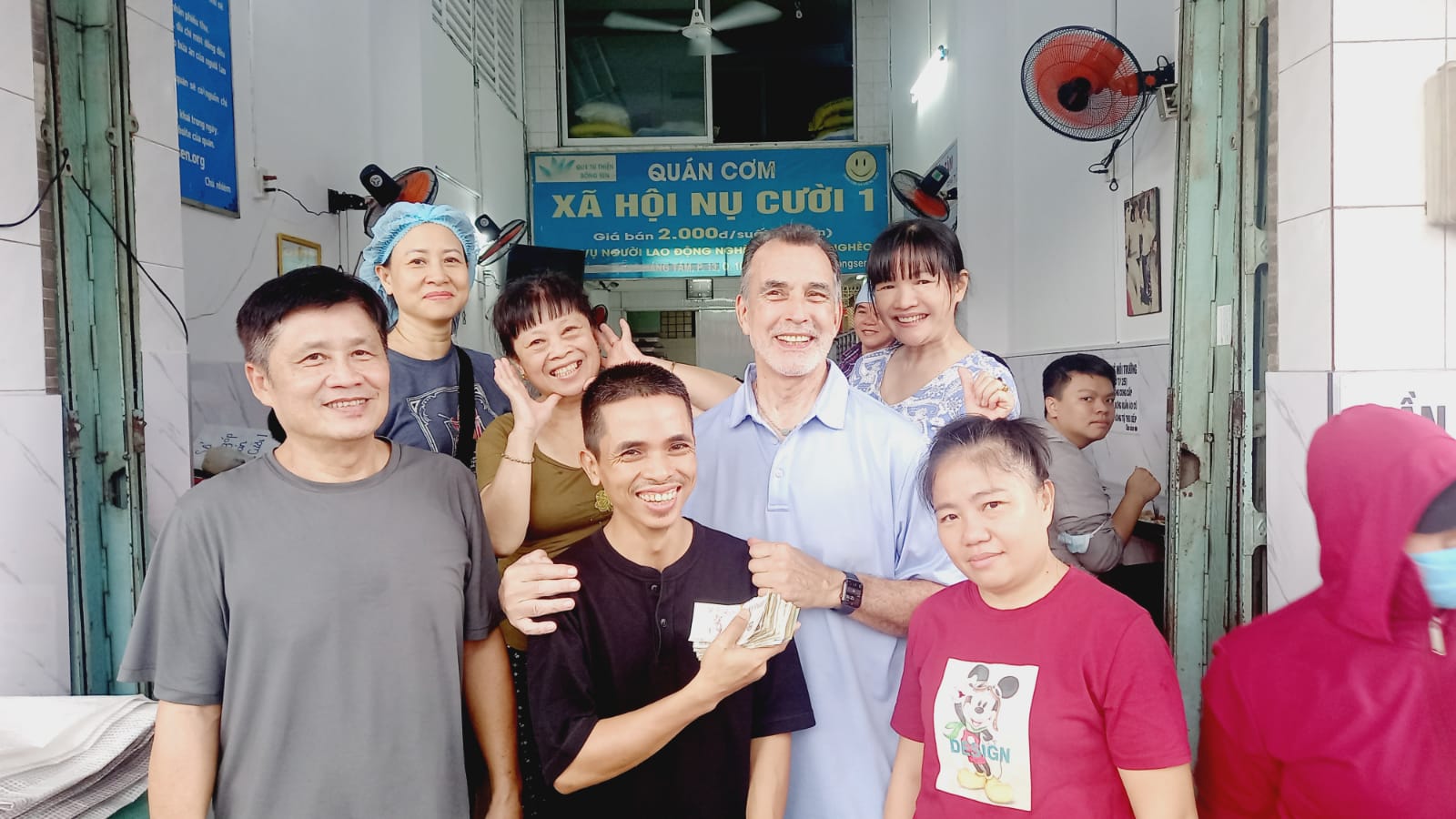
Art Hines, Renkert Oil’s Director of Operational Excellence, recently took some time off—but not for a typical vacation. He flew overseas to stuff clothing bags, wash dishes, and serve hot meals at a community outreach center in Ho Chi Minh City, Vietnam. Through his work with International Volunteer HQ (IVHQ), Art brings the same “work hard, stay humble, be kind” mindset he’s known for at Renkert to vulnerable communities throughout Southeast Asia. Questions about working with Renkert Oil? Contact us.
On a humid morning in Ho Chi Minh City, long before the lunch rush hits, the work has already started.
Donated clothes are piled high on a metal counter. Volunteers stuff them into tall burlap sacks bound for a distribution center as people from the neighborhood sift through, sometimes undoing the volunteers’ work in search of a shirt that fits or a jacket that will last one more rainy season.
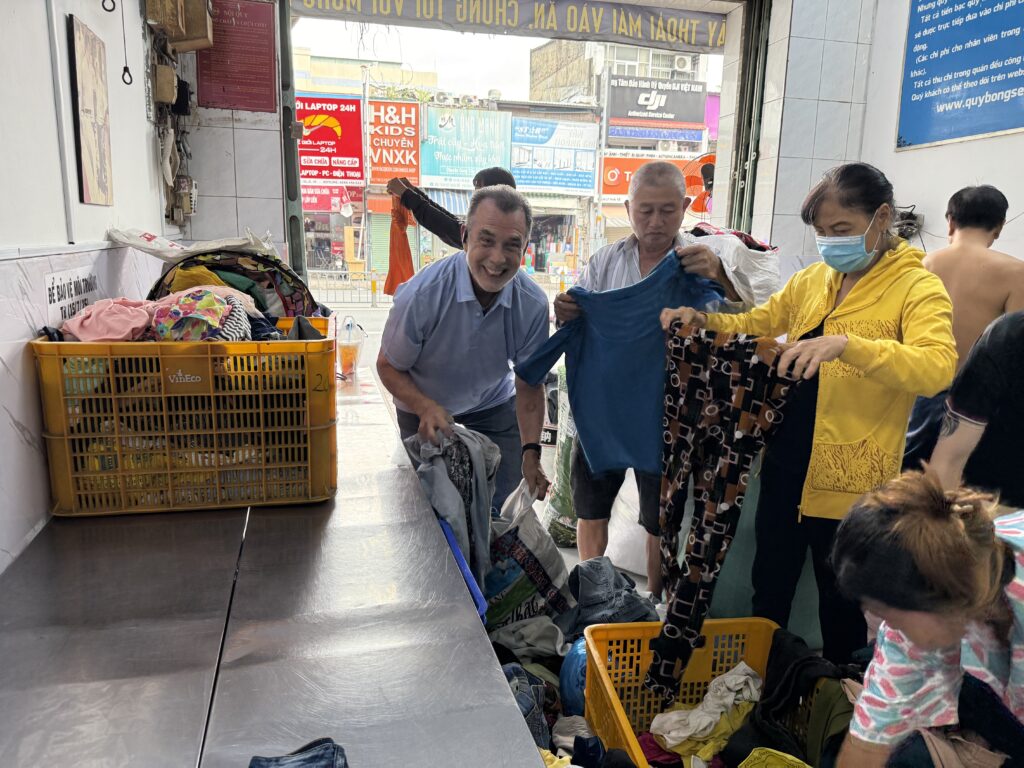
Art sorts clothing as visitors search through the morning’s latest donations.
By mid-morning, the focus shifts from clothes to food. Behind the kitchen doors, trays of rice are pulled from the ovens, steaming hot. Volunteers crack the baked rice loose with metal tools, pile it high in tubs, and roll bundles of utensils and napkins for the crowd that’s already lining up outside.
In the middle of it all is Renkert Oil’s Director of Operational Excellence, Art Hines, moving quickly, sleeves rolled up. And here, he’s happy to be known simply as “rice runner,” “bowl washer,” or whatever role he’s assigned.
“This is probably one of the most fulfilling things that I do now. And I intend to continue to do it until I can’t.” — Art Hines
Art’s Day Job: Operational Excellence At Renkert
Back home, Art’s work looks very different, but the mindset is the same.
After more than four decades in refining, terminals, logistics, and lubrication operations, including advising on global operational excellence at Chevron, Art joined Renkert Oil as Director of Operational Excellence in 2022.
His role is as broad as his experience. He weighs in on logistics and terminal conversations, helps shape procedures, and coaches our teams as they manage the complex work of moving specialty oils safely and reliably.
Ask Art how he approaches that responsibility, and he answers with a simple philosophy:
“I kind of have a phrase: work hard, stay humble, and be kind. That’s the best way to approach it in my opinion.”
It’s a mindset that shows up not just in how he supports customers and colleagues, but also in how he spends his time abroad.
IVHQ: A New Way To Serve
After years of traditional service opportunities, Art began looking for more structured ways to volunteer overseas. A plan to travel with Habitat for Humanity fell through during the pandemic, so he went searching for other options and discovered International Volunteer HQ (IVHQ).
IVHQ is a New Zealand–based volunteer travel organization that connects volunteers with community-led projects in 50+ destinations worldwide, from construction to teaching, healthcare, and food outreach. Volunteers pay their own way, and IVHQ works with in-country partners to place them where they’re most needed and best suited.
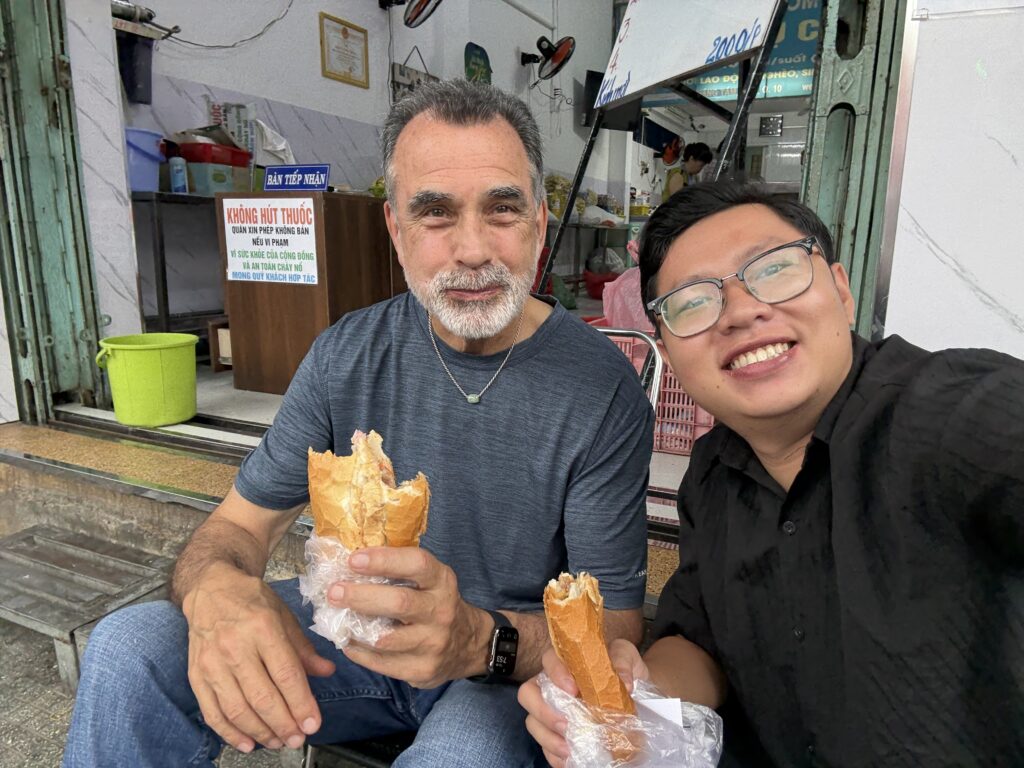
National favorite pork banh mi for breakfast with IVHQ staffer MJ before the day begins.
The opportunity to serve in a variety of ways appealed to Art, but he was especially keen on applying his experience in construction and renovation. And he liked the model of working alongside local teams engaged in ongoing work rather than “parachuting in” for a one-off effort.
Since 2022, he’s completed multiple trips with IVHQ, first to the Philippines for hands-on construction and renovation work, then to different sites in Thailand, and then to Vietnam.
The most recent trip took him to a food and clothing outreach program serving some of Ho Chi Minh City’s most vulnerable residents.
A Day at the “Soup Kitchen”
Americans might call the center where Art volunteered a “soup kitchen,” but it’s also a drop-off point for clothing donations. Each day started chest-deep in clothing.
“We’d get there around seven,” Art recalled. “You’ve got these sacks that are probably four feet high, and you’re just stuffing clothes in there while people are coming in to see what they can find.”

Stuffing clothing bags bound for a distribution center.
Donated garments are sorted and sent to a distribution center, but some are sold on-site for a token amount. It’s just a few hundred Vietnamese dong for a garment, well under a dollar.
As the bags are filled and picked up for transport to another distribution point, volunteers transition to the next phase of the morning: preparing to feed hundreds of people in just a few hours.
Prepping for the Rush
Once the clothing work is done, the team moves into the kitchen and dining area.
First comes the cleanup from previous days. Volunteers wash and dry stacks of durable soup bowls and trays. They roll hundreds of bundles of utensils and napkins so that servers can move quickly once the doors open.
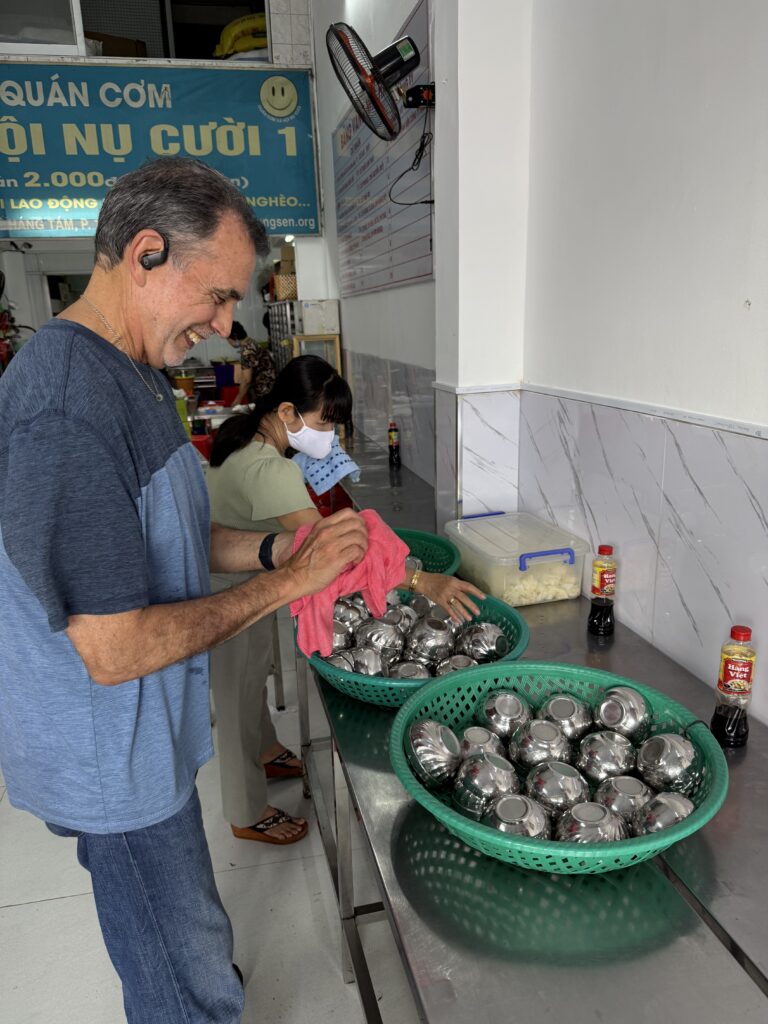
Drying bowls for the day’s meal service.
While the cook prepares the meat, massive metal trays are pulled from the ovens, heavy and too hot to handle barehanded. The volunteers get to work breaking up the rice to get it ready to serve.
WATCH: The cook prepares the day’s meal.
The trays are so hot, they would burn Art’s leg through his pants as he carried one against his hip. A local staff member quietly showed him how he handles it: he pulled his wallet from his pocket, which he uses as a buffer from the heat.
“You don’t recognize the need for it until you’re doing it and you’re going, ‘This hurts,’” Art said with a laugh. “Then you see how they’ve already solved it in their own way.”
It’s a small moment, but it captures something important about how Art approaches both volunteering and operational work—observing, learning from, and adapting systems.
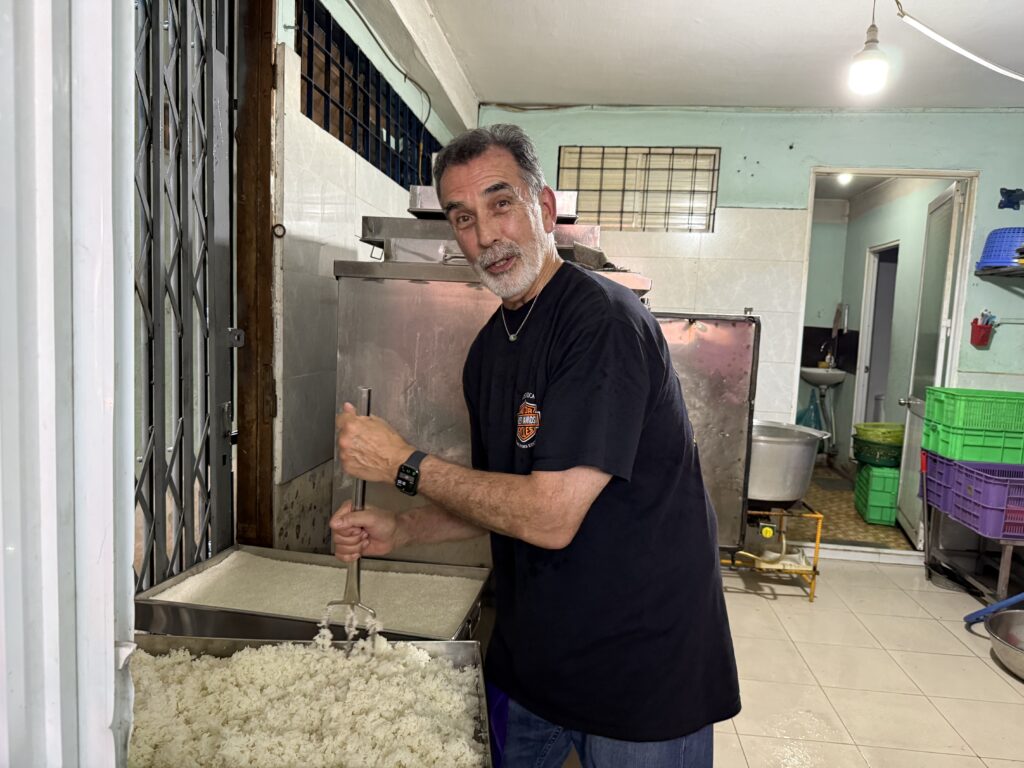
Breaking up the rice.
“Rice Runners” and the Lunch Line
By late morning, the line outside can stretch down the block, even on rainy days. The kitchen opens once everything is ready, a process that’s been refined over many years by local staff.
“Once the doors open, you’re working harder than I worked in construction and renovation,” Art said. “You’re constantly focused on keeping things flowing.”
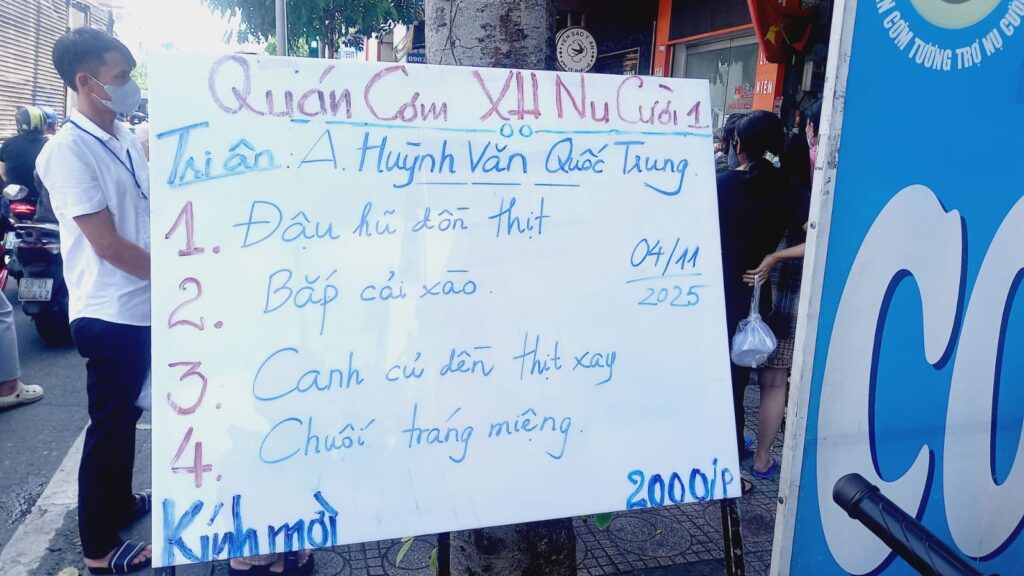
People line up outside. A sign lists today’s menu and the price: 2,000 dong, about 75 cents.
Each guest receives a tray with soup, vegetables, rice, and a portion of meat. Some eat on-site at long tables, and others bring containers for takeaway. Plastic markers and colored tags help the team distinguish between different meal types and special requests without slowing down the line.
These are quality meals provided at a very low cost. There’s flexibility if someone can’t pay. The point isn’t profit. It’s dignity.
“If you walk up to the cashier and you have 500 dong or you have no dong, they’ll give you a meal ticket. It allows you (guests) to maintain a little bit of pride, not just get a handout. You’re just there to get an economic meal.”
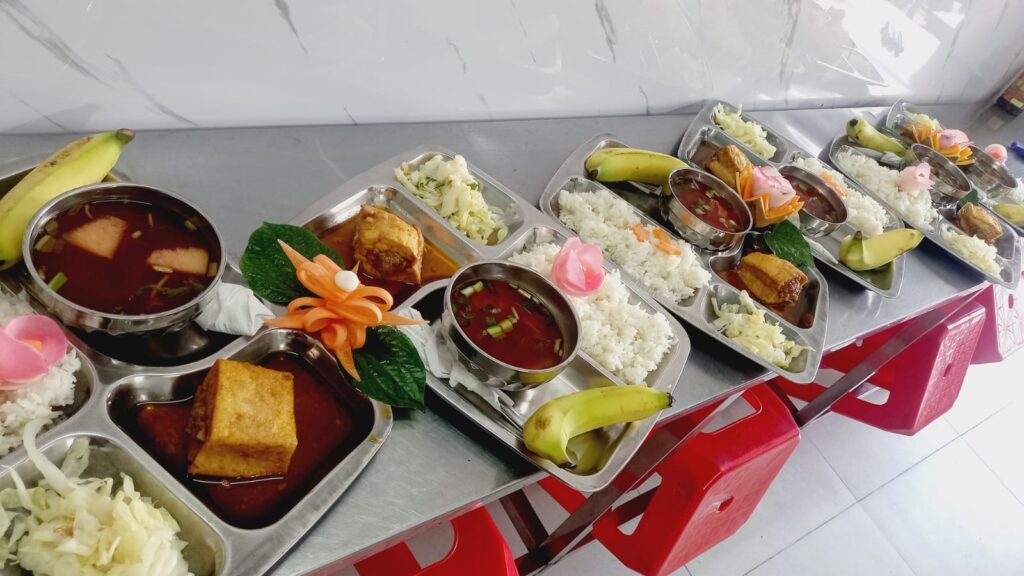
Food trays are adorned with edible garnish.
Art rotates between tasks as needed, whether serving, clearing trays, washing dishes, wiping tables, or running rice.
“They get a certain amount of food, but we’ll give them as much rice as they want. You’ve got a tub of rice and a rice scooper, and you’re walking up and down the aisles. People will call you, and you pile it on until they wave you off to tell you they don’t want any more.”
Most guests speak little or no English, so communication is almost entirely gestures, smiles, and nods of thanks.
“You realize pretty quickly you’re the only non-national in that area,” Art said. “But you’re all working toward the same thing.”
Nothing Wasted: Manning the Red Strainer
Not every moment is easy to watch.
Art was sometimes stationed out front, where guests who didn’t finish their soup would dump it into a bucket with a red strainer. The strainer would catch the food scraps. As volunteers cleared plates, some people patiently waited nearby.
“They’re waiting right there to pick through whatever’s in the strainer,” he recalled. “It’s sobering.”
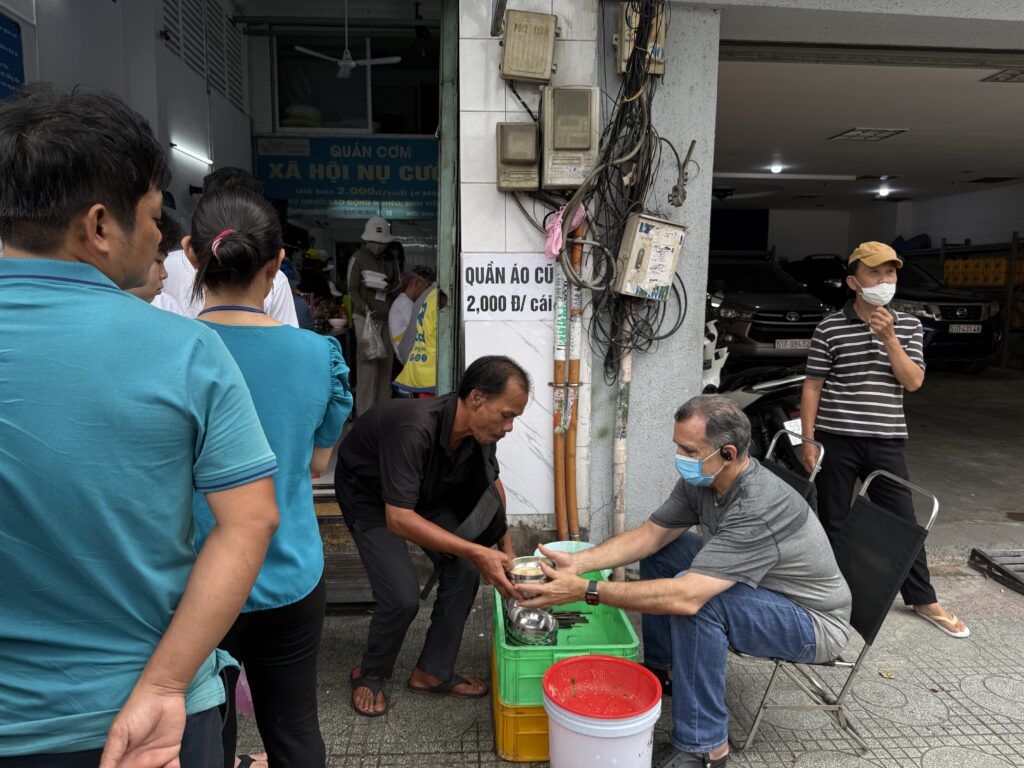
Art helps a man retrieve leftovers dumped into the red strainer.
Seeing that kind of need up close has shaped how Art thinks about hardship elsewhere.
“Even some of the bad conditions we have here in the U.S. would be pretty desirable when you go into other countries,” he said. “But they don’t have an ‘oh woe is me’ attitude. They express a lot of gratitude.”
Hat In Hand: The Mindset Behind the Work
For someone whose career has been built on improving systems and writing procedures, it might be tempting to jump in and start rearranging the flow.
Art doesn’t see it that way.
“When I go into things like this, I try to go in fairly hat in hand,” he said. “You share what you can when you can, and you absorb as much as you can. It’s a give and take.”
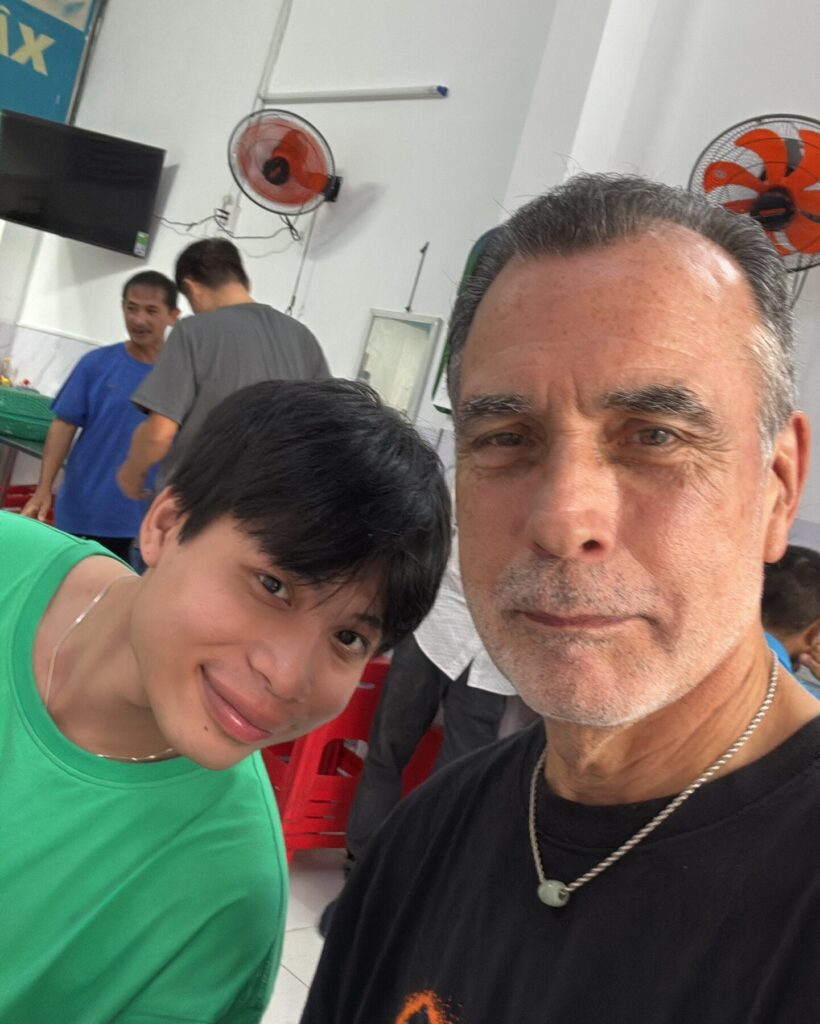
Art and IVHQ staffer Bee.
He does notice small ways the work might be safer or more efficient. Sometimes he’ll ask why something is done a certain way. But at the end of the day, he respects that it’s not his operation to redesign.
“It’s their world,” Art said. “I’m there to support what they’re doing, not change it.”
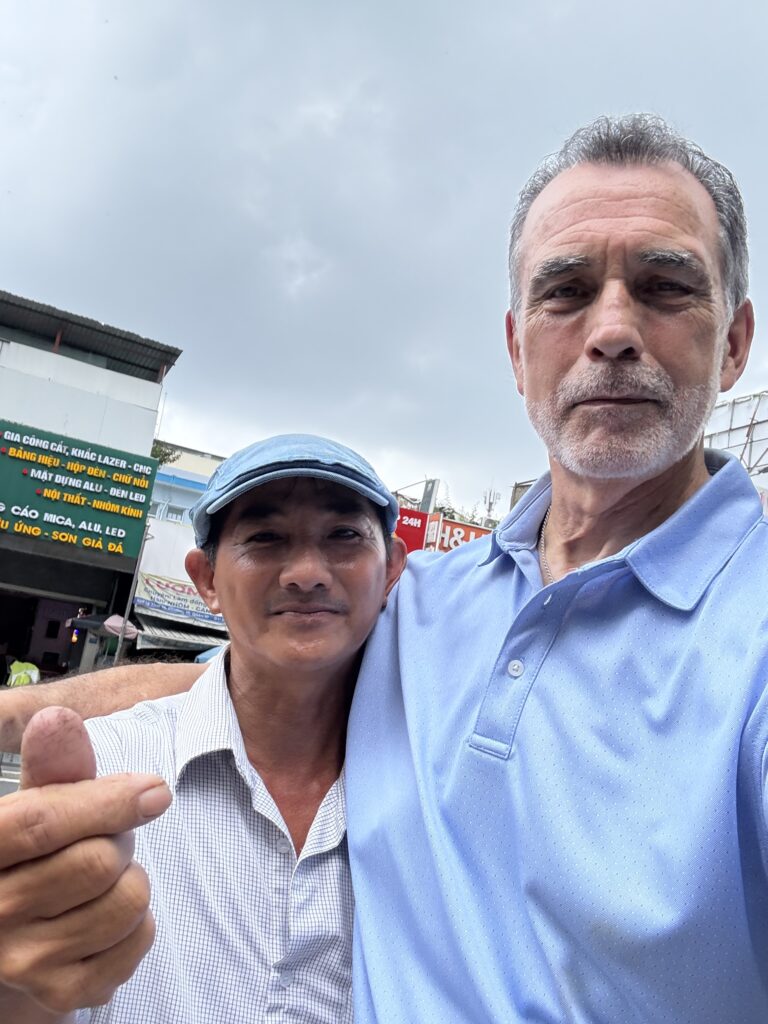
Art with Thuc, a staffer at the outreach center.
During downtime, he swaps stories with fellow volunteers, most of them decades younger and from all over the world. They talk about school, work, relationships, and what they hope to do next. Art is happy to listen and to share a little hard-earned wisdom when it’s welcome.
Applying the Same Values at Renkert Oil
Whether on the other side of the world or at one of our terminals, Art approaches people and processes the same way: with seriousness about safety and excellence, and with a humble appreciation of the team effort.
At Renkert Oil, we often talk about supply security, operational excellence, and long-term partnerships. Stories like Art’s remind us that behind every shipment, every schedule, and every plan are people who bring their character, values, and experiences to the work every day.
For our customers, it means this: when you work with Renkert Oil, you’re not just working with a specialty oils supplier. You’re working with people who are committed to doing things the right way, for the right reasons, wherever they are.
Want to learn more about working with us? Let’s talk. Contact us today!